
Why Moms Prefer Moringa to Fenugreek for Breastfeeding

Why Moms Prefer Moringa to Fenugreek for Breastfeeding
Many moms encounter issues during their breastfeeding journey. A high percentage experience a low milk supply, which can affect healthy infant weight gain and lead to concern and frustration. It’s not unusual to turn to lactation supplements that increase breast milk production. There are several natural herbal supplements that can help, with fenugreek seeds and Moringa leaves being among the most common. Both have been used for decades, but Moringa offers important additional benefits that help both mother and baby.
Understanding Natural Galactagogues for Breastfeeding
Breastfeeding mothers have long turned to natural galactagogue herbs and foods to support lactation and maintain healthy breast milk volume. Among the most widely used are fenugreek and moringa, both with strong roots in traditional medicine used for medicinal purposes across cultures. While both support lactation by stimulating key hormones like prolactin and oxytocin, moringa stands apart as a complete nutritional powerhouse that benefits both mother and baby well beyond milk production alone.
For mothers exploring lactation support, understanding how these two herbs work and where they differ makes it easier to choose the right fit for your breastfeeding journey.
How Moringa Helps with Milk Supply
Moringa for breastfeeding works by being a galactagogue, a natural substance that stimulates breast milk production. It does this by increasing prolactin, which helps produce milk in a nursing mother. But it also does more. Organic Moringa is packed with so many vitamins, minerals, antioxidants, and micronutrients that it’s classified as a “superfood.” This exceptional nutrition supports both mom and baby and helps boost energy during nursing.
Moringa can also be consumed in many ways, including as a lactation tea for breastfeeding. This extra hydration is another essential ingredient in boosting milk production.
Boosting Nutrients for Milk Production
Pregnancy and the post-partum period create stress on the body, depleting essential nutrients. These changes can impact milk supply and lead to fatigue. Among various moringa-based breastfeeding supplements, Moringa is an exceptionally rich source of nutrients that support the nursing mother and are also passed along to the baby.
Balancing Hormones for Milk Supply
The physical stresses of pregnancy and the post-partum period can disrupt hormone levels. Organic Moringa naturally works with the pituitary hormone prolactin to stimulate healthier breast milk production. It also provides nutritional support to maintain balance throughout the various bodily systems.
Reducing Stress and Fatigue
Nursing mothers routinely experience stress and fatigue. Not only do these affect their daily quality of life, but they can also trigger a low milk supply for their baby. Moringa is a superfood that helps address many nutritional deficiencies during the breastfeeding journey, boosting energy and milk supply.
How Fenugreek Helps with Milk Supply

Fenugreek seeds have often been used to help with milk supply during nursing. It’s most often taken as a tea. Research has shown that the moringa seed oil may help increase milk production by stimulating the hormone prolactin. It’s also thought that ingesting fenugreek can result in an effect that mimics estrogen, which also impacts breast milk supply. Finally, this herb can also stimulate the reflex that allows milk to flow to the mother’s breast when the baby latches on.
Stimulating Prolactin for Milk Production
Fenugreek is believed to help stimulate the production of prolactin, the hormone that’s responsible for the production of breast milk.
Mimicking Estrogen for Lactation
Among lactation supplements, fenugreek has properties that indicate “estrogenic activity,” meaning it mimics the effects of estrogen in the body. Estrogen is part of breast milk production.
Enhancing the Let-Down Reflex
The “let-down” reflex occurs when the baby latches on and begins to suckle. This helps the milk flow to the mother’s breast. Fenugreek helps produce oxytocin and prolactin, both of which increase milk production.
The Science Behind Moringa and Fenugreek for Milk Production
Moringa and fenugreek are traditional lactation supplements that nursing mothers use to naturally support milk supply. Known as “galactagogues,” they work by stimulating hormones like oxytocin and (most importantly) prolactin that are essential for breast milk production. During pregnancy and the postpartum period, these hormones often become unbalanced.
Ingesting these lactation supplements is a way for mothers who want to increase milk supply for their babies and make their breastfeeding journey more satisfying.
Moringa vs Fenugreek for Breastfeeding
When it comes to moringa vs fenugreek for milk supply support, both herbs act as natural galactagogues, but moringa offers considerably more. Beyond helping increase breast milk volume, moringa delivers broad nutrition and lactation support that fenugreek simply doesn't match.
Breastfeeding mothers who are sensitive to fenugreek often find moringa to be a gentler, more tolerable alternative. Fenugreek is known to cause digestive concerns in some mothers, including gas, bloating, and stomach discomfort issues, which moringa is far less likely to trigger. For mothers with nutritional support needs during the postpartum period, moringa's rich profile of vitamins, minerals, antioxidants, and fiber helps replenish nutrients depleted by pregnancy and nursing.
Taste is another key difference. Fenugreek can impart a distinct flavor to breast milk that some babies reject, making nursing more difficult. Moringa has a mild, fresh taste that doesn't affect milk flavor. Fewer taste concerns mean a smoother experience for both mom and baby.
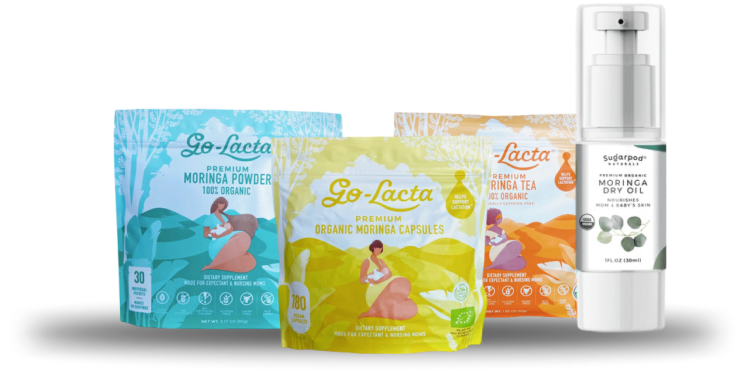
Moringa also wins on convenience. Fenugreek is most commonly taken as a tea, while moringa offers flexible forms, including capsules, powder, tea, and even moringa seed oil. Go-Lacta's organic moringa powder blends easily into smoothies, yogurt, soups, sauces, and baked goods, making it simple to stay consistent, even on the busiest days.
When to Choose Moringa Over Fenugreek for Lactation Support
Consistency is essential when taking a lactation supplement, and moringa makes it easier than fenugreek. Whether you're managing side effects, dealing with an infant who rejects the breast, or simply looking for a supplement that supports lactation while also improving your overall energy and health, moringa is a more comprehensive option. Go-Lacta's organic moringa line offers multiple entry points so breastfeeding mothers can find the format that sticks.
Fenugreek is most often taken as a tea, while Moringa can be consumed as a tea, as moringa capsules, or as a powder mixed with various foods. This herb provides many ways to easily incorporate it into your day.
Fenugreek Side Effects While Breastfeeding
Fenugreek has a long history as a lactation supplement, but breastfeeding mothers should be aware of its potential side effects before starting. Common issues include:
- Digestive upset—Fenugreek can irritate the digestive system, causing nausea or stomach discomfort in some mothers.
- Gas or bloating — One of the most frequently reported side effects; some babies experience this as well if the compound passes through breast milk.
- Maple syrup body odor—Fenugreek contains a compound called "sotolone," which can cause a distinctive maple syrup-like smell in sweat, urine, and even breast milk. While harmless, it can be unexpected and persistent.
- Possible baby sensitivity — Some infants become fussy or gassy when their mothers take fenugreek, which may signal sensitivity to the herb via breast milk.
- Allergic reactions — Fenugreek belongs to the same plant family as peanuts and chickpeas. Mothers or babies with legume allergies should use it with caution, as allergic reactions are possible.
When to consult a healthcare provider — Speak with a lactation consultant or your healthcare provider before starting fenugreek, especially if you have a history of hormone-sensitive conditions, blood sugar concerns, or known legume allergies. If your baby shows signs of digestive distress or unusual fussiness after you begin taking fenugreek, stop use and seek guidance promptly.
How to Incorporate Moringa and Fenugreek Into Your Diet

Consistency is one of the most important factors in achieving results with any lactation supplement, and moringa makes it easy. Here's how breastfeeding mothers are working it in:
Smoothies and yogurt — Moringa powder blends seamlessly into morning smoothies or is stirred into yogurt. It's one of the quickest ways to get your daily dose alongside breakfast, with brewer's yeast or other add-ins if you prefer a full lactation blend.
Soups and sauces—Moringa powder dissolves easily into warm dishes. Add it to pasta sauce, soups, stews, or curries without altering flavor.
Capsules for convenience — For mothers who prefer simplicity, moringa capsules deliver a consistent dose with no prep required, ideal for days when cooking isn't an option. Go-Lacta's more milk special blend offers a targeted capsule option designed specifically for milk volume support.
Lactation tea options — Both fenugreek and moringa are available as tea. Go-Lacta's moringa lactation tea provides additional hydration alongside lactation support, and this fluid intake itself plays a meaningful role in maintaining breast milk volume.
Whether you're drawn to moringa for its nutritional depth, its flexible forms, or its gentler profile compared to fenugreek, Go-Lacta's full product line makes it easy to find what works for your lifestyle.
Frequently Asked Questions
Is moringa safe while breastfeeding?
Yes. Organic moringa is widely considered safe for breastfeeding mothers when taken as directed. It has been used as a natural galactagogue for generations and is well tolerated by most mothers and babies. As with any supplement, consult your healthcare provider or lactation consultant before starting, particularly if you have underlying health conditions.
How quickly does moringa work for milk supply?
Results vary, but many breastfeeding mothers report an improvement in breast milk volume within a few days to 2 weeks of consistently taking moringa. Staying well hydrated and nursing or pumping frequently, alongside taking moringa, supports the best outcomes.
Is moringa better than fenugreek for breastfeeding?
For many mothers, yes. While both support lactation, moringa offers broader nutritional support and fewer side effects, as well as more flexible forms than fenugreek. Mothers sensitive to fenugreek or those with digestive concerns often find moringa to be a more comfortable and effective option. It also doesn't affect breast milk taste the way fenugreek can.
Can I take moringa and fenugreek together?
Some breastfeeding mothers do take both supplements together, but it's best to consult a lactation consultant or healthcare provider first. Combining them may amplify effects on prolactin and milk volume, but individual tolerance varies. Starting with one at a time helps you identify what works and what doesn't.
Does moringa affect the taste of breast milk?
No. Unlike fenugreek, which can cause a maple syrup-like flavor in breast milk that some babies dislike, moringa has a mild, fresh taste that doesn't noticeably alter milk flavor. This makes it a preferred choice for mothers whose babies have rejected the breast after starting fenugreek.
Conclusion
For breastfeeding mothers weighing their options, moringa offers what fenugreek can't fully match: effective lactation support combined with superfood-level nutrition. Known as the miracle tree across many cultures, moringa naturally stimulates prolactin to support breast milk volume while replenishing the vitamins, minerals, and antioxidants depleted during the postpartum period, benefits that reach your baby with every feed. With flexible forms and fewer taste concerns than fenugreek, it's easy to stay consistent. Shop Go-Lacta's full product line and find the moringa format that works for you.

Angela Veloso

Angela Veloso is the founder of Go-Lacta, a brand dedicated to supporting breastfeeding mothers through the power of organic Philippine Moringa. She's passionate about helping moms nourish their babies naturally with clean, science-backed lactation supplements.



Leave a Comment
Your email address will not be published. Required fields are marked *